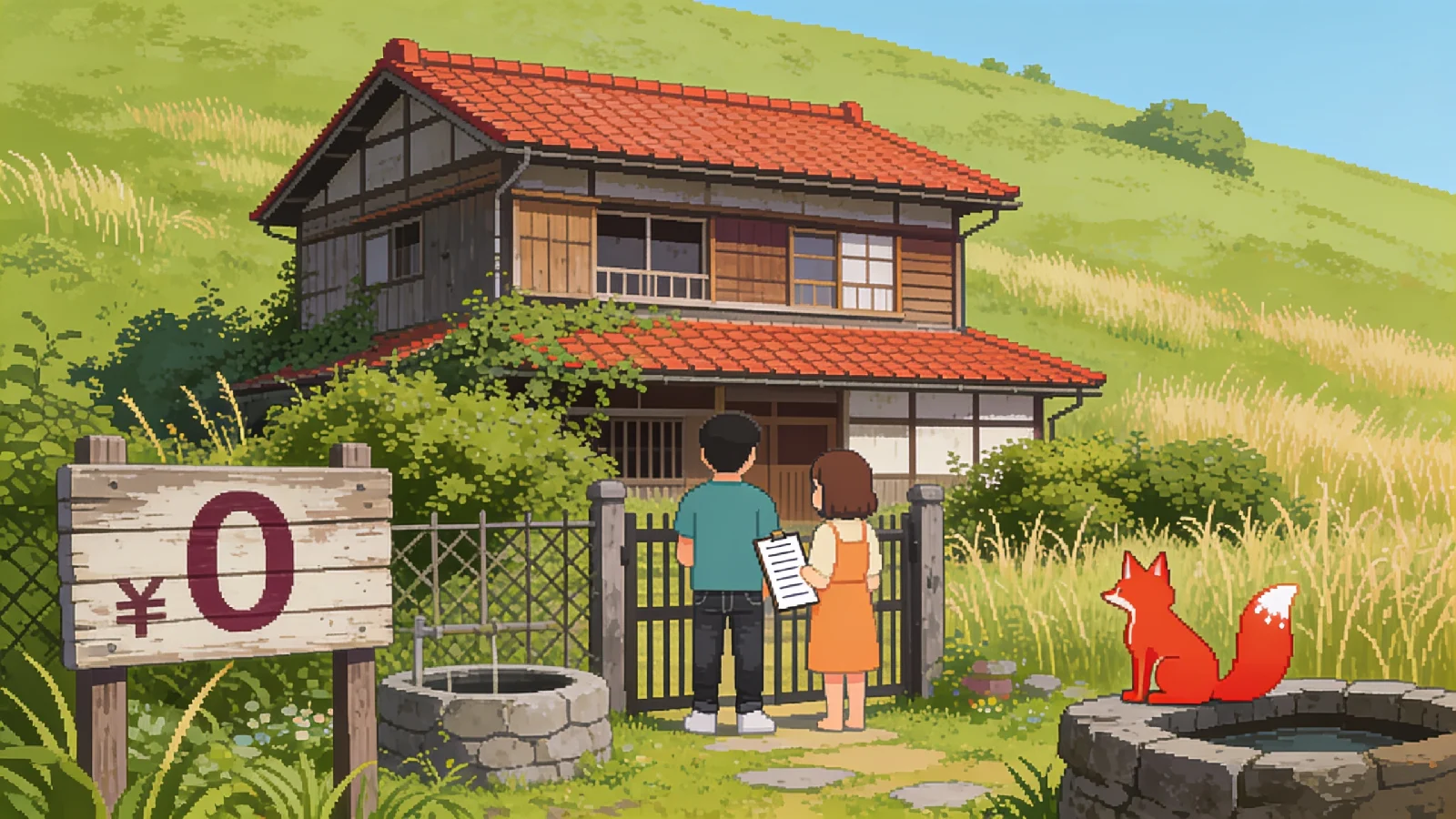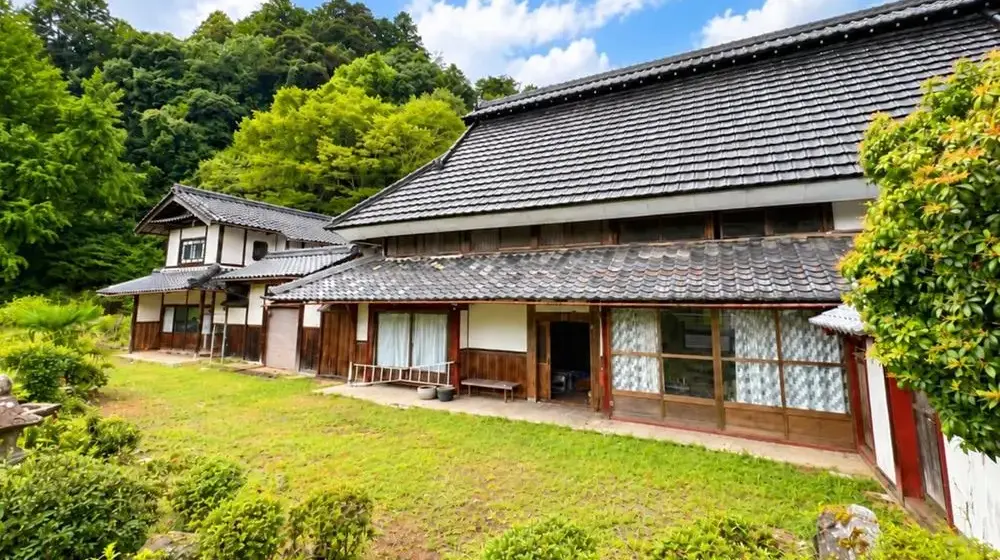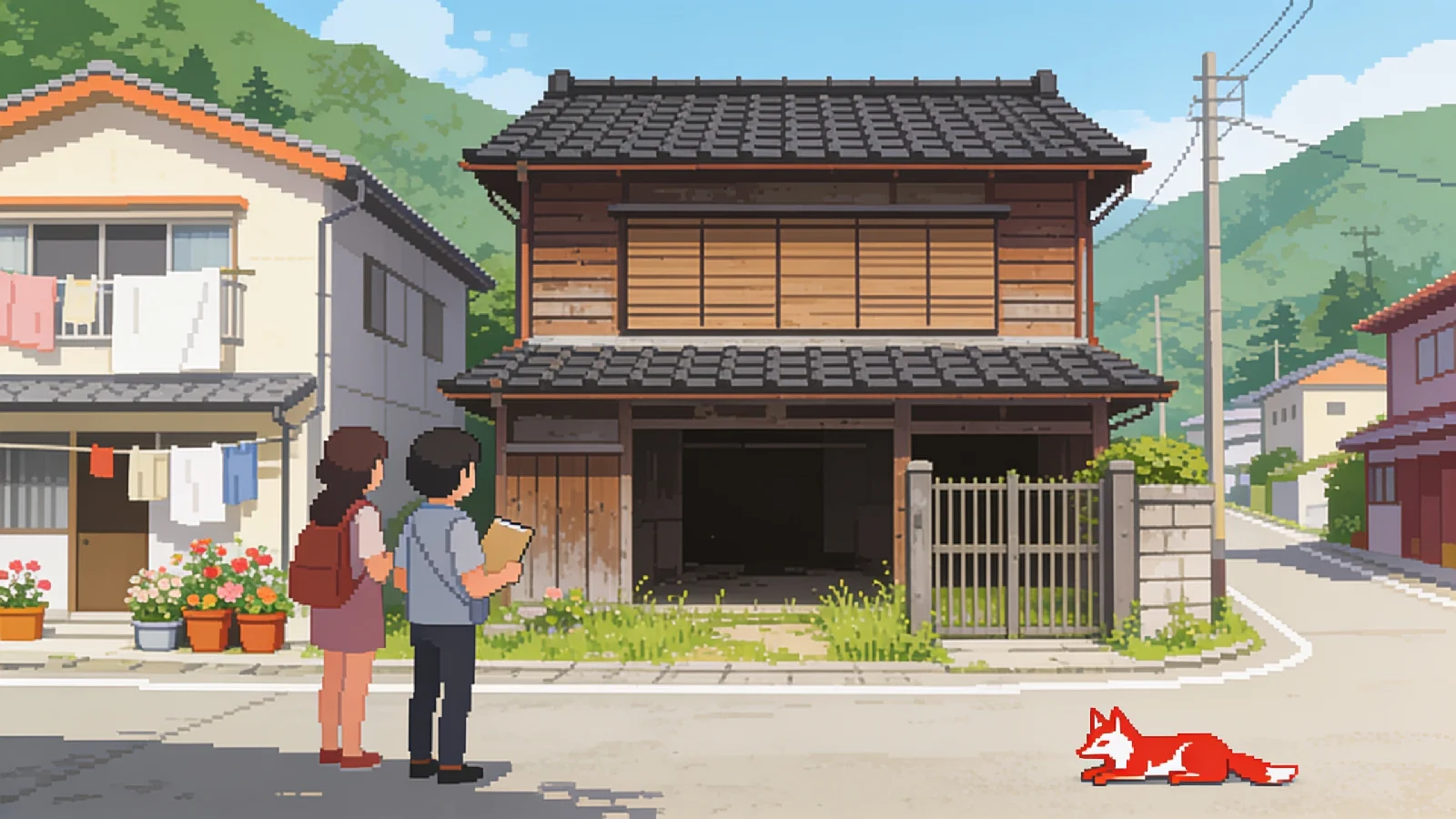
"Akiya" has become the word for a cheap old house in the Japanese countryside. In Japan it simply means an empty house, and the numbers behind it are large: one home in seven has nobody living in it.
This guide explains what counts as an akiya, why Japan has so many, how few of them are actually for sale, and what the ones on the market cost. The prices come from the 5,700+ houses for sale on Japan Houses, and the national figures from Japan's official housing survey.
Short answers about akiya
- What it is: any home with nobody living in it. For buyers, usually an old detached house outside the big cities.
- How many: 9.0 million empty homes in Japan, 13.8% of all homes, both records.
- How many are for sale: very few. Only 191,000 empty detached houses were listed for sale in the survey.
- What they cost: the empty houses on our site have a median price of $49,603, against $125,914 for houses the owner still lives in.
- Who can buy: anyone, including foreigners who do not live in Japan.
- What to expect: an older house sold as it is. 59% of the empty houses we list were built before Japan's 1981 earthquake standard.
What is an akiya?
Akiya (空き家) is the everyday Japanese word for a vacant house: aki means empty, ya means house. Japan's national Housing and Land Survey uses it for any dwelling where no household usually lives. That definition is wide. It includes a flat between two tenants, a holiday cottage, a new house nobody has bought yet, and a farmhouse left empty when its owner moved into a care home.
When English-language articles and videos talk about akiya, they mean the last kind: an older detached house, usually outside the big cities, that the family no longer uses and wants to sell cheaply or simply get rid of. That is also how we use the word on Japan Houses. A house is in our akiya (vacant houses) for sale collection when the Japanese listing states that it is empty, not because of its price or its age.
Why does Japan have 9 million empty houses?
Japan's last housing survey counted 9,002,000 vacant homes, up from 8,489,000 five years earlier. The vacancy rate reached 13.8%, the highest ever recorded, and the number of empty homes has roughly doubled in 30 years.
Several causes add up:
- Houses outlive their owners' families. Children move to the cities, the parents die or move into care, and the heirs have no use for a house in a town where they do not live.
- Selling is hard, so owners wait. In shrinking towns there are few buyers. An old wooden house is often valued at almost nothing, and the heirs leave it empty instead of paying to sell or demolish it.
- Getting rid of it costs money. The state accepts inherited land only once the buildings on it are gone. Demolition is expensive: the national standard cost that towns use for their subsidies is ¥36,000 per m² of floor area for a wooden house.
- An empty house is cheap to keep, up to a point. A plot with a house on it pays much less land tax, as little as one sixth of the normal taxable value. Owners have long kept the house standing for that reason.
The government is now pushing owners to act. Since the amended Vacant Houses Act came into force, a town can warn the owner of a badly kept empty house and remove that land tax reduction. Since April 2024, heirs must also register an inherited property within 3 years or risk a fine of up to ¥100,000, which brings forgotten houses back into the open, and onto the market.
Which regions have the most empty houses?
The vacancy rate is highest in rural prefectures that are losing people. In the survey, Tokushima (21.3%) and Wakayama (21.2%) came first, followed by Kagoshima, Yamanashi, Kochi and Nagano, all above 20%. The lowest rates were in Saitama (9.3%), Okinawa (9.4%) and Kanagawa (9.8%).
Tokyo is the exception that confuses many people: its vacancy rate is low at 10.9%, but with 897,000 empty homes it has more than any other prefecture. Most of those are flats waiting for tenants, not houses you could buy cheaply.
How many akiya are actually for sale?
Very few, and this is the part that most articles skip. The survey sorts empty homes by why they are empty:
| Type of empty home | Number | Share |
|---|---|---|
| For rent (mostly flats between tenants) | 4,436,000 | 49.3% |
| Not for rent, not for sale, not a second home | 3,856,000 | 42.8% |
| Second homes and holiday houses | 384,000 | 4.3% |
| For sale | 326,000 | 3.6% |
Look only at detached houses, the kind most buyers have in mind, and the gap is wider. Japan had 3,523,000 empty detached houses. 2,851,000 of them (80.9%) were simply empty, with no plan to rent or sell. Only 191,000 were for sale.
So the 9 million figure tells you about Japan's population, not about what you can buy. Most empty houses will never reach the market, or only after the owner dies and the heirs decide. A house in the "simply empty" group cannot be bought by knocking on the door: someone has to decide to sell, sort out the inheritance and register it first.
How much does an akiya cost?
Less than a house that is still lived in, by a wide margin. We compared the houses on our site that the listing describes as empty with the houses whose owner still lives in them. The median empty house costs $49,603; the median lived-in house costs $125,914.
Share of each group in each price range, on Japan Houses: 3,205 houses listed as empty (orange) and 732 houses the owner still lives in (light). Updated with every new listing.
Empty houses dominate the cheap end of the market. Of our houses priced at ¥3 million ($19,078) or less, 85% are empty. That makes sense: an empty house earns nothing and costs tax every year, and its owner usually lives somewhere else and wants the matter closed.
Not every akiya is cheap, though. Plenty of empty houses are recent, in good condition, and priced like any other house. The low prices come with older houses in rural areas, which is also where repairs, access and resale need the most thought.
A real akiya for ¥450,000: what the listing says
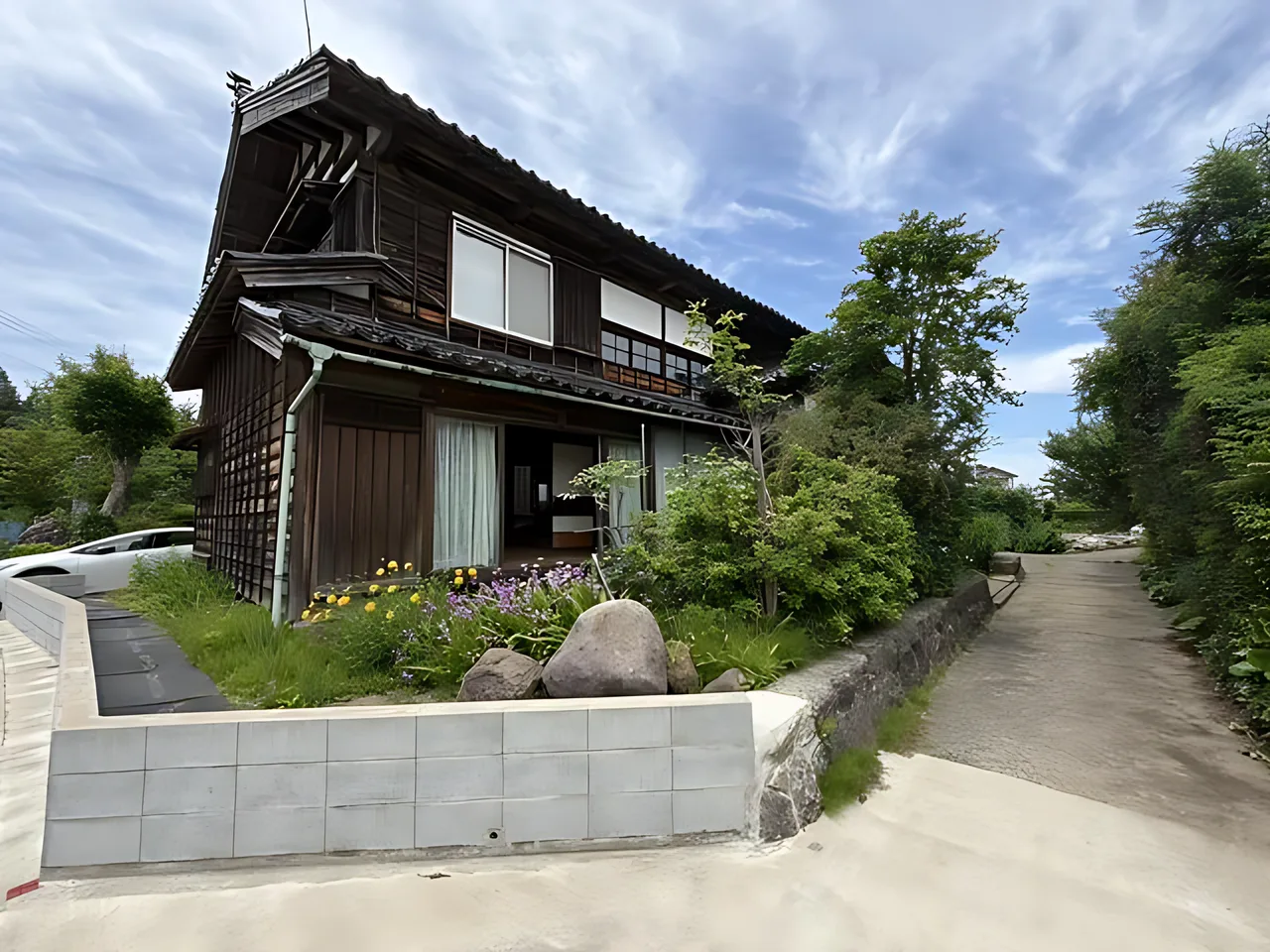
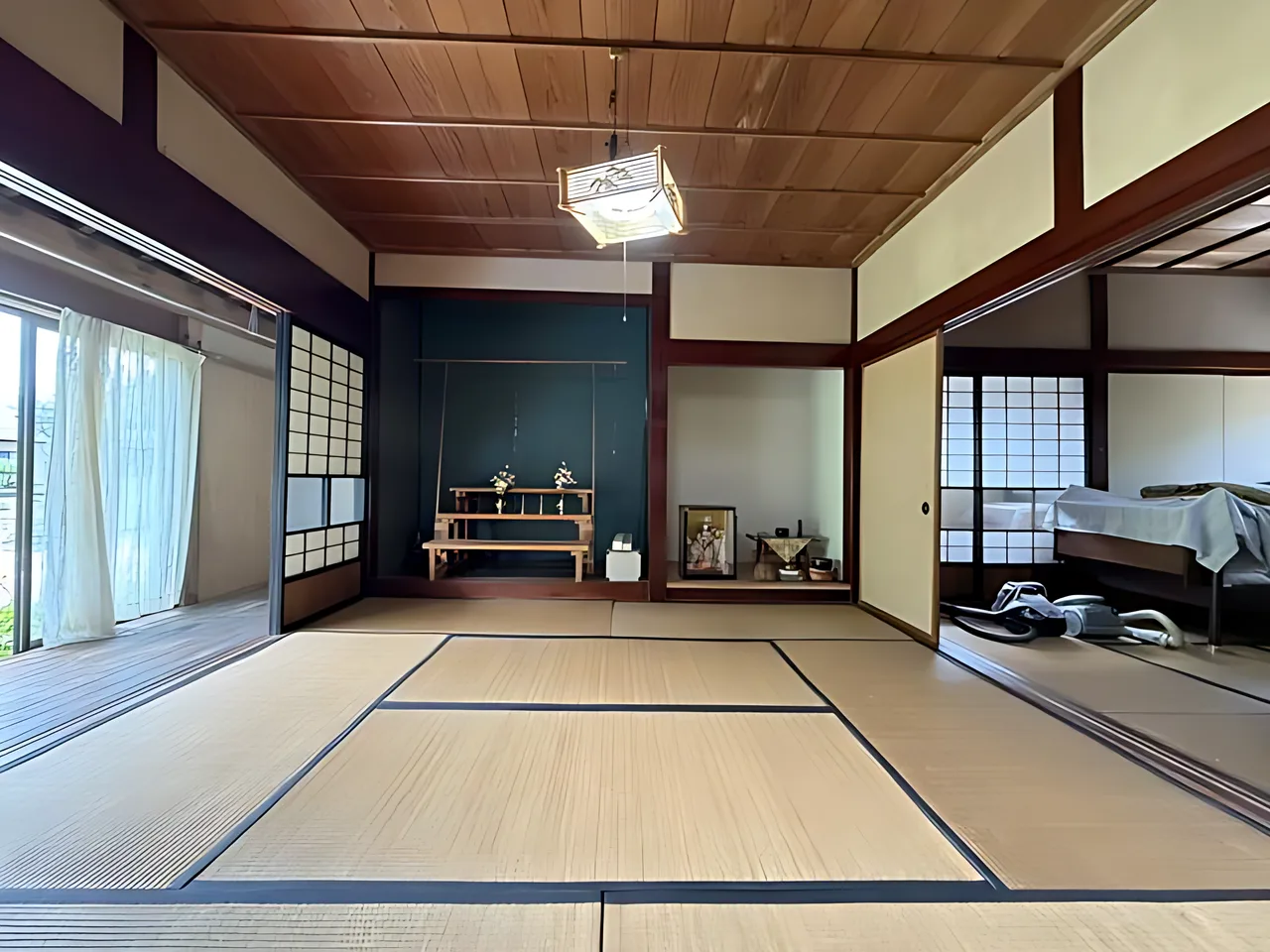
When we wrote this guide, one of the empty houses on our site was a 1936 wooden house in Kashiwazaki, Niigata, for ¥450,000 ($2,862). It is a good example of what a cheap akiya looks like once you read the Japanese listing in full.
| What the listing says | What it means for you |
|---|---|
| Built 1936, some renovation done, history unknown | Nobody can tell you what was repaired or when; an inspection is the only way to know |
| Sold as is, without a survey | The boundaries are not measured, and the house comes in the state you see |
| 99 m² of the plot is farmland | Buying that part needs permission from the local agricultural committee |
| A 248 m² parking plot, 3 minutes away on foot, is included | Two separate pieces of land to register and pay tax on |
| Agent's fee: ¥330,000 | 73% of the price, allowed by law on houses at ¥8 million or less if agreed in advance |
| 7.1 km to the nearest station | You need a car |
The fee is the line that surprises buyers. Since July 2024, agents may charge up to ¥330,000 including tax on any house priced at ¥8 million or less, even when the house costs less than the fee. On a ¥450,000 house, the agent's fee alone is close to the price. The house is also listed on the city's own vacant-house programme, which is common for cheap rural akiya.
Can foreigners buy an akiya?
Yes, on the same terms as Japanese buyers. Under Japan's Civil Code, foreign nationals can own land and buildings outright, and there is no nationality, visa or residency condition. An American, a Briton or an Australian can buy an empty house in Japan, even without ever living there.
A few rules apply to everyone, and some to buyers abroad:
- Report the purchase if you live outside Japan. Since April 2026, a non-resident must report every purchase of Japanese property to the Ministry of Finance within 20 days, including a home to live in. It is a report, not a permission.
- Declare your nationality at registration. Every new owner, Japanese or foreign, now gives their nationality when the title is registered. It is not shown on the public register.
- Farmland is different. Fields and paddies need the local agricultural committee's permission to change hands, for any buyer. Many rural akiya come with a field, so ask early.
- Buying gives you no visa. Owning a house does not let you stay in Japan longer. Permanent residence normally needs 10 years of continuous residence, so the house and the right to live in it are two separate questions.
Our guides on buying property in Japan as a foreigner and on how to buy a house in Japan, step by step, cover the paperwork in detail.
Empty houses you can buy now
These are real akiya from our listings, chosen for the quality of their photos. Prices are converted into your currency.
Empty houses in Japan under $10,000
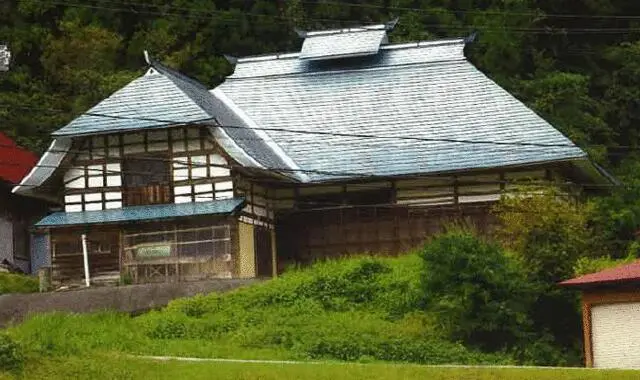
Vacant 6DK house on a 645 m² lot in Nishiaizu, Fukushima

10DK south-facing house with three parking spaces in Maesawa, Oshu, Iwate
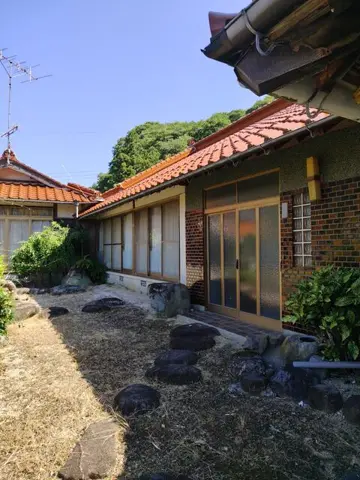
Single-storey 11DK house with veranda on an 853 m² lot in Mine, Yamaguchi
Empty houses from $10,000 to $50,000

Six-room house with earthen storehouse and field, Takahashi

Century-old kominka with large barn and rice paddy in Mitoyo, Kagawa

Single-storey 9K kominka with two barns on a 1,187 m² lot in Shobara, Hiroshima
Empty houses over $50,000, built after 1981
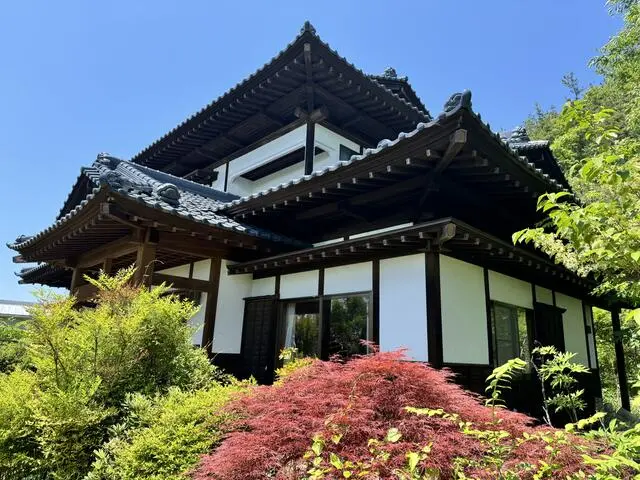
Vacant 7DK house on 638 m2 of land in Watari, Fukushima City
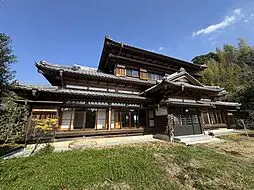
Renovated Japanese-style house with kura on 1,450 m² in Oamishirasato

Custom-built 12SLDK house with 2 annexes and 9 parking spaces in Nara
Is buying an akiya worth it?
It can be, if you buy the house for what it is: an old building with a low price and an unknown amount of work. The purchase price is rarely the biggest number. What decides whether an akiya is a good deal:
- The structure. 59% of the empty houses we list were built before 1981. Japan's land ministry says many houses from that period lack earthquake resistance and recommends a seismic diagnosis before you rely on one.
- The roof, floors and water. Houses left empty for years suffer from leaks, rot, termites and dead plumbing. Get at least two quotes from local builders after an inspection.
- The right to rebuild. A plot needs at least 2 m of frontage on a road at least 4 m wide for a new house to be allowed. Without it, if the old house burns or falls down, you may not be able to build again.
- The running costs. Fixed asset tax is 1.4% of the town's assessed value every year, plus up to 0.3% city planning tax in some areas. If you live abroad, you need a tax representative in Japan to pay it.
- The exit. If a house sat empty for years before you bought it, selling it later may take just as long. Buy one you are happy to keep.
A house at ¥3 or ¥5 million in sound condition often costs less in the end than a ¥500,000 house that needs a new roof. Compare the total: price, fees, taxes, repairs, and how you will reach the house. For tax and legal questions, ask a licensed agent, a judicial scrivener or a Japanese tax accountant before you sign.
 Tailor-made house search · freeLooking for a house in Japan? We find it for you.Answer 7 quick questions. We search 300,000+ houses for sale in Japan and keep only the ones that fit you.Start my free search →
Before you buy an empty house
Questions to ask the agent about any akiya
- How long has it been empty? The longer, the more water and pest damage to expect.
- What is left inside? Furniture and belongings are often left behind, and clearing them is your cost.
- Can the house be rebuilt? Ask about the road access in writing.
- Is any of the land farmland or forest? It changes who can buy it and how.
- How do water, sewage and heating work? Wells, septic tanks and old gas tanks are common.
- What is the assessed value? It drives the transfer taxes and the yearly property tax.
- Does the town offer a grant? Many towns pay part of the renovation, often only for people who move in.
If you want to see what is on the market today, our akiya (vacant houses) for sale collection lists every empty house we have, translated, with prices in your currency and the foreign-buyer points checked. For the very cheapest end, read our guide to free houses in Japan.
Frequently asked questions
What does akiya mean?
Akiya (空き家) is the ordinary Japanese word for an empty house: aki means empty or vacant, ya means house. Japan's housing survey uses it for any home where nobody usually lives, from a flat waiting for a tenant to a farmhouse left empty after its owner died. In English, people usually mean the second kind: an old, empty house in the countryside.
Can an American buy an akiya?
Yes. Japan has no nationality, visa or residency condition for buying a house or land, and an American owns it outright like a Japanese buyer. If you live outside Japan, you must report the purchase to the Ministry of Finance within 20 days, and you need someone in Japan to receive the yearly tax bill. Our guide Can foreigners buy property in Japan? covers the details.
Can a US citizen live permanently in Japan by buying an akiya?
No. Owning a house in Japan gives you no visa and no right to stay. You need a separate residence status, for example for work or as the spouse of a Japanese citizen. Permanent residence is normally considered only after 10 years of continuous residence in Japan, including at least 5 years on a work or residence status. Ask an immigration specialist, such as an administrative scrivener (gyōsei shoshi), about your own case.
Are akiya free?
A very small number are given away, but almost all akiya on the market have a price, often a low one. Even a free house comes with taxes, fees and repairs. Our guide to free houses in Japan looks at a real ¥0 listing and what it costs in the end.
Do you need to live in Japan to buy an akiya?
No. You can buy from abroad: the contract can be signed by mail or through a representative, and a judicial scrivener (shihō shoshi) registers the title. Some towns keep their renovation grants for people who move there, so a buyer who stays abroad may not get them.
Sources (12)Official Japanese sources and our own listing data. Show the list
- Statistics Bureau of Japan: Housing and Land Survey, basic results (PDF)
- MLIT: amended Vacant Houses Act, summary (PDF)
- MLIT: earthquake resistance of houses built under the old standard
- MLIT: legal cap on agent fees, including the ¥8 million rule
- Ministry of Justice: handing inherited land to the state
- Ministry of Justice: mandatory inheritance registration
- e-Gov: Civil Code, article 3 (rights of foreign nationals)
- e-Gov: Building Standards Act, articles 42 and 43 (road access)
- Ministry of Finance: reporting real estate bought by non-residents
- Ministry of Agriculture: farmland acquisitions and the agricultural committee
- Immigration Services Agency: guidelines for permanent residence
- Ministry of Internal Affairs and Communications: fixed asset tax
 Written by the Japan Houses team from official Japanese sources (listed above) and our own data on the houses we list. We are not lawyers or tax advisers: for your own purchase, check with a licensed agent, a judicial scrivener (shihō shoshi) and, for taxes, a tax accountant. Published 23 October 2026, updated 23 October 2026.