Buying a house in Japan follows a fixed order set by law and by habit. Agents, scriveners and banks all expect the same sequence, so once you know it, the process is predictable. This guide walks through each step with what happens, how long it takes and what you pay, then shows the full bill for three real houses we list.
None of these steps depends on your nationality. If you are still wondering whether you are allowed to buy, read Can foreigners buy property in Japan? first: the short answer is yes, with no visa needed.
How long each step takes and what you pay
| Step | What happens | How long | What you pay |
|---|---|---|---|
| 1. Budget | Decide how you will pay and add one-off costs to the price | Before you search | Nothing |
| 2. Search and questions | Find a house, ask for the documents, view it in person or by video | Days to months | Nothing (an inspection if you order one) |
| 3. Offer | Send a written purchase application with your price and conditions | Days for a reply | Nothing |
| 4. Important matters | A licensed specialist explains the house and the contract in writing | Before signing, often the same day | Nothing |
| 5. Contract | Sign the sale contract and pay the deposit | One meeting, or by mail | Deposit (often 5% to 20%) and stamp duty |
| 6. Documents | Prepare proof of identity and address, and a power of attorney if needed | Between contract and closing | Notary and translation, if abroad |
| 7. Closing | Pay the balance, receive the keys; the scrivener files the registration | Usually 1 to 2 months after the contract | Balance, agent's fee, registration tax, scrivener |
| 8. After closing | Report the purchase if you live abroad, name a tax representative | Report within 20 days; tax bill a few months later | Acquisition tax |
| 9. Every year | Pay the fixed asset tax, keep your registered address up to date | Yearly; address changes within 2 years | 1.4% of the assessed value, plus up to 0.3% city planning tax |
Step 1: Work out your budget
If you live abroad, expect to pay cash. The government-backed Flat 35 loan requires permanent residency, and the few banks that lend to foreigners without it want borrowers who live and earn in Japan. So plan with your own money or a loan from your home country.
Cash is realistic here because prices outside the big cities are low. The median asking price of the 5,700+ houses we list is $66,773, and 2,167 of them cost under $50,000.
Share of the houses for sale on Japan Houses in each price range (asking price converted to US dollars, updated with every new listing). In orange: under $50,000.
On top of the price, budget for one-off costs. On the three real houses in the example further down, they come to between 5% and 17% of the price. The share is highest on cheap houses, because some fees are fixed amounts. Every house page on Japan Houses shows its own estimate in "What it really costs".
Step 2: Find a house and ask for the documents
Most houses for sale in Japan are listed in Japanese, on portals used by local agents. We translate and check them so you can compare houses in English; our houses for sale in Japan are updated every day.
When a house interests you, ask the agent for the documents before you think about price: the floor plan, the land register extract, the year of construction, the road access, and the hazard maps for the address. For an older house, ask whether a building condition survey (kenbutsu jōkyō chōsa) has been done. Before the contract, the agent must tell you whether one was done and what it found. 51% of the houses we list with a known build year were built before 1981, when Japan's stricter earthquake standard came in, so this check matters.
Then view the house, in person or by video call. A visit shows what photos hide: the state of the roof, damp under the floor, the slope and width of the access road, and how far the nearest shop really is.
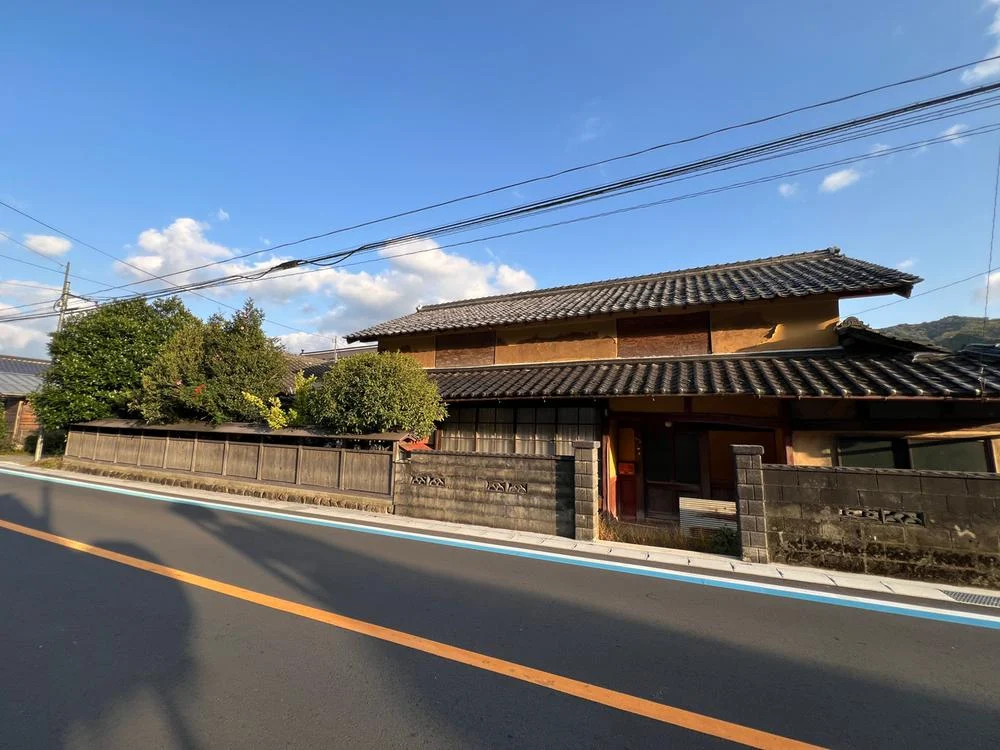
Step 3: Make a written offer
When you are ready, you send the seller, through the agent, a purchase application (kōnyū mōshikomi, often on a form called kaitsuke shōmeisho). It states the price you offer, the deposit, the planned closing date and your conditions, such as a loan clause or an inspection.
The application is not the contract. Either side can still walk away without paying anything, and the seller can reply with a counter-offer. How much room there is depends on how long the house has been for sale and how many people are asking about it.
Step 4: The agent explains the house and the contract
Before any sale contract is signed, the law requires the agent to have a licensed real estate transaction specialist (takuchi tatemono torihikishi) explain the "important matters" (jūyō jikō setsumei) to you, in writing. This is the most useful document in the whole process. It covers:
- the rights registered on the land and building, and who owns them;
- the planning and building rules that apply, including whether the house can be rebuilt;
- private road shares, and the state of water, electricity, gas and drainage;
- whether a building survey was done, and its result;
- the cancellation terms, penalties and what happens if your loan is refused.
This explanation can be given by video call, and the document can be sent electronically if you agree. Ask for it a few days before the meeting and have it translated: once you sign, it is too late to discover that the road is private or the house cannot be rebuilt.
Lines to check before you sign
- Rebuilding: look for the road width and frontage. A plot with less than 2 m of frontage on a 4 m road usually cannot be rebuilt.
- Defect liability: private sellers may limit or exclude it. They remain liable for defects they knew about and hid, but proving that is hard.
- Farmland: a field sold with the house needs the agricultural committee's permission to change owner.
- Cancellation: check the deposit terms, the penalty amount and the loan clause.
Step 5: Sign the contract and pay the deposit
The sale contract is usually signed straight after the explanation. You pay the deposit (tetsukekin) at signing, in one payment. Japanese sources give different ranges: the industry's consumer site says 10% to 20% of the price, a large broker says 5% to 10%. The amount is agreed between you and the seller.
Under the Civil Code, the deposit also works as a cancellation deposit: until the other side has started performing the contract, you can cancel by giving up the deposit, and the seller can cancel by paying you back double.
When a licensed real estate company is itself the seller, the law adds three protections: the deposit cannot exceed 20% of the price, liability for defects must last at least 2 years from handover, and if you signed away from the company's office, you can cancel in writing within 8 days of being told about this right. When the seller is a private person, these rules do not apply and the contract terms decide.
If you are borrowing, insist on a loan clause (rōn tokuyaku): if the bank refuses the loan through no fault of yours, you can cancel and get the deposit back.
Stamp duty is paid on the contract with a revenue stamp. It depends on the price: ¥1,000 for a house between ¥1 million and ¥5 million, ¥5,000 between ¥5 million and ¥10 million, and ¥10,000 between ¥10 million and ¥50 million, at the current reduced rates.
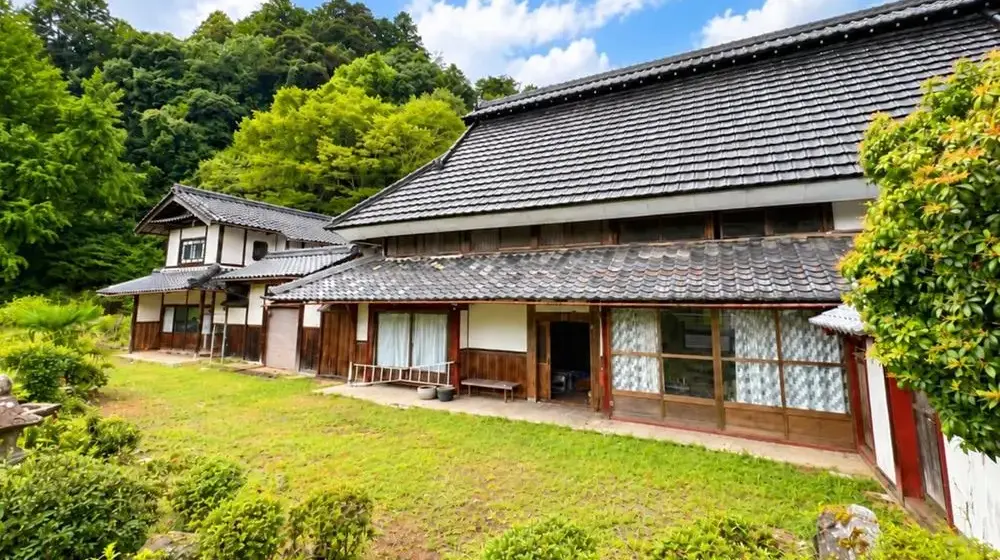
Houses under $50,000 built after the 1981 earthquake code
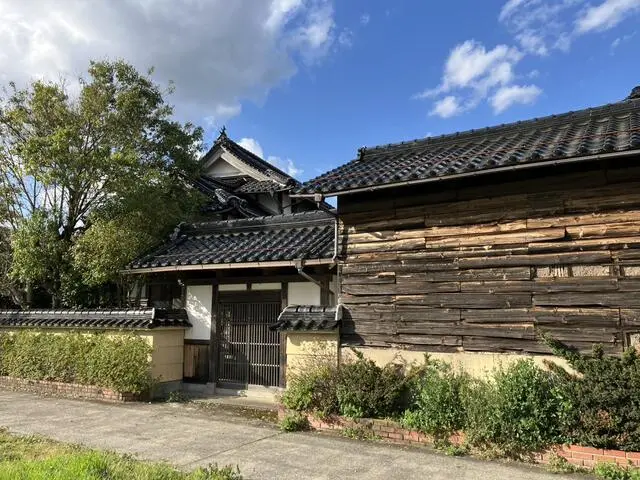
1986 eight-room house with free parking near Kokuei Station, Tottori
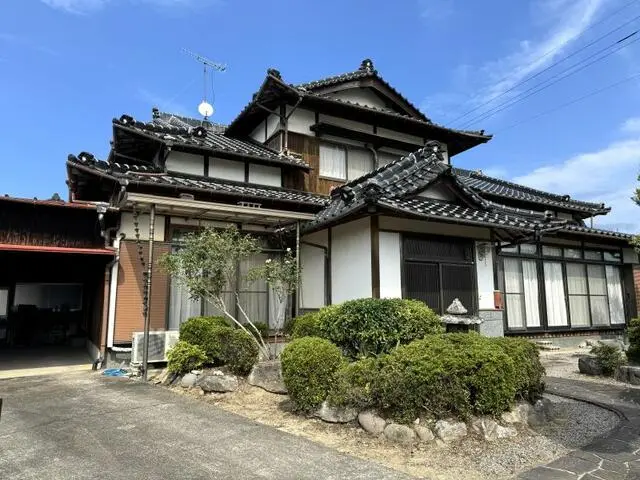
5LDK Japanese-style house with garden and storehouse in Usa, Oita

Single-storey 5LDK on 1,000 m² in Jinseki Kogen, Hiroshima
Step 6: Get your papers ready
Between contract and closing, the judicial scrivener (shihō shoshi) who will register the sale asks for your documents. If you live in Japan, that means a residence certificate (jūminhyō) from your city hall. If you live abroad, you do not need a Japanese address: you provide a sworn statement of your name and address, signed in front of a notary in your own country, with a copy of your passport and a Japanese translation.
Every new owner also declares their nationality at registration, with a passport copy as proof. It is kept by the Legal Affairs Bureau and does not appear on the public register.
If you cannot attend closing, you give a power of attorney to the scrivener or another person in Japan. Ask the scrivener for their fee in writing at this stage; each office sets its own.
Step 7: Pay the balance and get the keys
Closing (kessai) usually takes place 1 to 2 months after the contract. On the day, you pay the balance of the price, the seller hands over the keys, and the scrivener files the transfer of ownership at the Legal Affairs Bureau at the same time. The agent's fee, the scrivener's fee and the registration tax are paid around the same date.
The agent's fee is capped by law at 3% of the price plus ¥60,000, plus 10% tax. For a house priced at ¥8 million or less, the agent may charge up to ¥330,000 including tax if they explain it and you agree in advance. 40% of the houses we list fall under that ¥8 million line, so ask for the fee in writing before you make an offer.
If you live abroad, the application must also name a contact person in Japan, such as your scrivener or agent, who can be reached about the property.
Step 8: The report and taxes after you buy
Three things follow the purchase:
- The 20-day report. Since April 2026, a buyer who lives outside Japan must report every purchase of Japanese real estate to the Minister of Finance, through the Bank of Japan, within 20 days. It is a report, not an approval, and your agent or scrivener can file it online. Foreigners who work in Japan or have lived here for 6 months or more count as residents and do not file it.
- A tax representative. If you do not live in the town where the house is, you name a tax representative (nōzei kanrinin) who receives the tax bills and pays them for you.
- The acquisition tax bill. The prefecture sends a one-off real estate acquisition tax bill a few months after the purchase: 3% of the assessed value, with the land value halved for housing land under current reduced rates. On old rural houses with a low assessed value, it is often small.
Step 9: The yearly property tax
Whoever owns the house on January 1 pays that year's fixed asset tax: 1.4% of the assessed value at the standard rate, plus up to 0.3% city planning tax in urban areas. The assessed value is set by the town, not by the price you paid.
If you change your name or address, you must register the change within 2 years, or risk a fine of up to ¥50,000. Owners living abroad have to file this themselves. An empty house also needs someone to air it, clear the gutters and check it after storms; arrange this before you buy, not after the first winter.
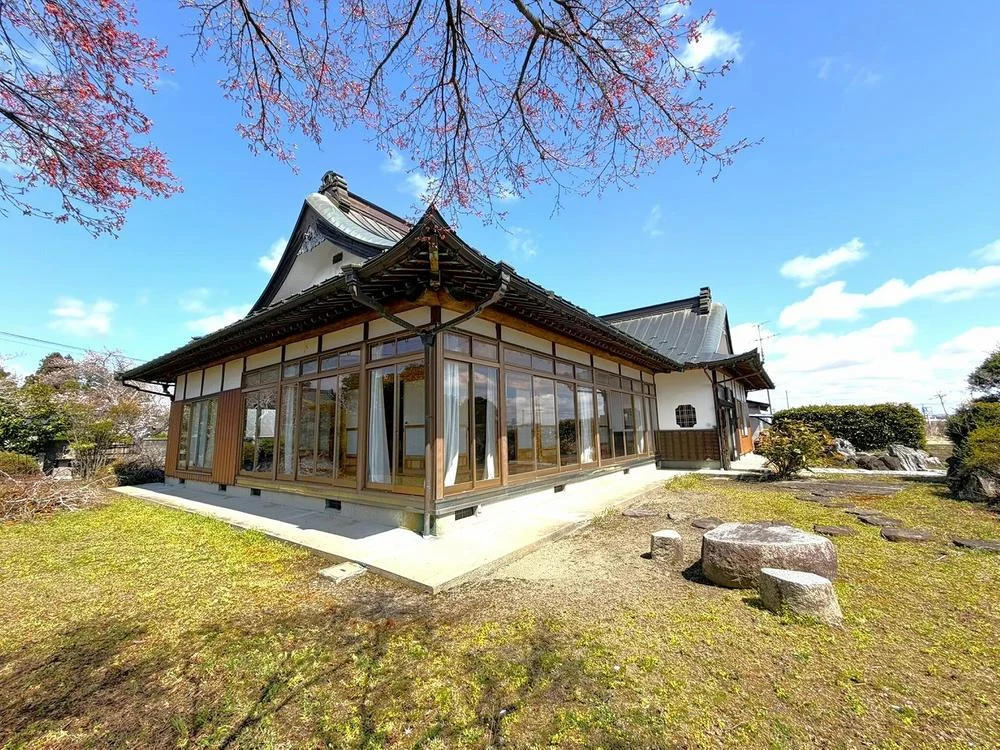
The full bill for three houses we list
To show how the money moves, here are three houses for sale on Japan Houses at three price levels: a 1965 farmhouse in Ayabe, Kyoto, a 1993 ten-room house in Daisen, Akita and a renovated 1976 house in Echizen, Fukui. The deposit is shown at 10%. Lines marked "estimate" come from the same cost model as our house pages, because taxes depend on the assessed value, which listings do not show.
| Ayabe, Kyoto | Daisen, Akita | Echizen, Fukui | |
|---|---|---|---|
| Asking price | $20,986 | $76,312 | $170,429 |
| At contract: deposit (10%) | $2,099 | $7,631 | $17,043 |
| At contract: stamp duty | $6 | $64 | $64 |
| At closing: balance of the price | $18,887 | $68,680 | $153,386 |
| Agent's fee, legal maximum | $1,063 to $2,099 | $2,938 | $6,044 |
| Registration tax and scrivener (estimate) | $636 to $1,227 | $967 to $1,946 | $1,533 to $3,167 |
| A few months later: acquisition tax (estimate) | up to $337 | $458 to $1,221 | $1,024 to $2,728 |
| Total on top of the price | $1,706 to $3,669 (8% to 17%) | $4,426 to $6,169 (6% to 8%) | $8,664 to $12,003 (5% to 7%) |
The cheapest house costs the most in relative terms, mainly because of the agent's fee: on the Ayabe house, the higher fee allowed for houses at ¥8 million or less would be about 10% of the price on its own. The Ayabe and Echizen houses were also built before 1981, so set aside money for an inspection and possible reinforcement on top of these figures.
 Tailor-made house search · freeLooking for a house in Japan? We find it for you.Answer 7 quick questions. We search 300,000+ houses for sale in Japan and keep only the ones that fit you.Start my free search →
Buying without flying to Japan
What you can do from home
- Ask questions and view the house by video call with the agent.
- Hear the important matters explanation online, and receive the document electronically.
- Sign the contract by mail or electronically, or through a power of attorney.
- Prove your identity with a notarized statement and a passport copy, instead of a Japanese address or seal.
- Register the title: the scrivener files it for you.
- File the 20-day report: your agent or scrivener can do it online.
Two things still need a person in Japan: a contact person named at registration, and a tax representative for the yearly bills. Your scrivener, your agent or a property manager can usually take on both roles, for a fee.
If you can make one trip, plan it to view several houses in one region over a few days. The visit is the step we would not skip.
Traditional houses for sale right now

Six-room house with earthen storehouse and field, Takahashi

Century-old kominka with large barn and rice paddy in Mitoyo, Kagawa
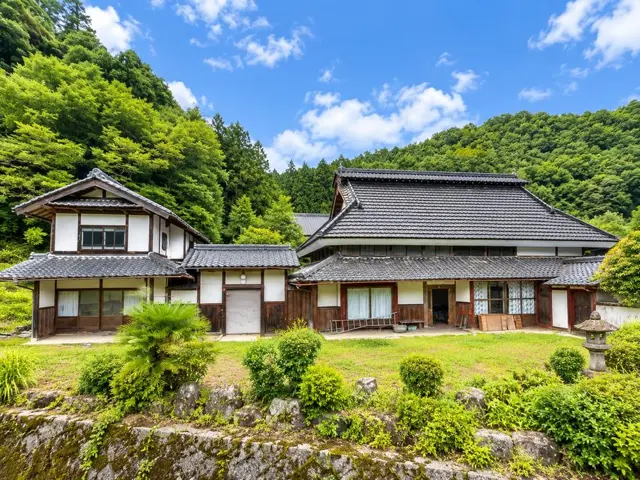
Century-old 8LDK house on 713 m² of freehold land in Kyoto
The people you will deal with
| Who | Role | Paid by you? |
|---|---|---|
| Real estate agent (fudōsan-ya) | Finds the house, negotiates, gives the important matters explanation | Yes, capped by law |
| Judicial scrivener (shihō shoshi) | Checks identities, registers the transfer, can file the 20-day report | Yes, set by each office |
| Tax representative (nōzei kanrinin) | Receives and pays your tax bills if you live elsewhere | Usually, unless a friend or relative does it |
| Building inspector | Surveys the structure, roof and damp before you sign | Yes, optional but advised for old houses |
| Tax accountant (zeirishi) | Advises on tax when you rent out or sell the house | Only if needed |
This guide explains the process; it is not legal or tax advice. For your own purchase, rely on a licensed agent, a judicial scrivener and, for tax questions, a tax accountant.
Frequently asked questions
Can I buy a house in Japan as a foreigner?
Yes. Japan has no nationality, visa or residency condition for buying a house or land, and you own the land outright like a Japanese buyer. The process on this page is the same for everyone. The differences for foreigners are practical: documents in Japanese, loans that are hard to get if you live abroad, and a report to the Ministry of Finance within 20 days if you are not resident in Japan. Our guide Can foreigners buy property in Japan? covers the legal side in detail.
Can I buy an akiya as a foreigner?
Yes. An akiya is simply a vacant house, and it is bought through the same steps as any other house. Two points matter more with cheap empty houses: on a house priced at ¥8 million or less, the agent may charge up to ¥330,000 including tax if you agree in advance, and the seller may limit or exclude liability for defects, so an inspection before you sign is worth the money.
How hard is it for a foreigner to buy property in Japan?
The legal side is simple; the practical side takes effort. Most listings, agents and contracts are in Japanese, banks rarely lend to people who live abroad, and you need someone in Japan to receive tax bills. A bilingual agent, a judicial scrivener and a tax representative solve most of it.
Do I need to come to Japan to buy a house?
No. The important matters explanation can be done by video call, documents can be sent electronically or by mail, you can sign through a power of attorney, and a notarized statement from your own country replaces a Japanese address. Visiting at least once is still worth it, because photos rarely show the state of a roof or the slope of a road.
Can you permanently live in Japan as a foreigner if you own a house?
Owning a house gives no right to live in Japan. Permanent residency is assessed, in principle, after 10 years of continuous residence on a visa, including at least 5 years on a work or family-type status. Until then you need a visa that matches what you do in Japan, such as work, spouse or Business Manager.
Can a foreigner buy a house in Okinawa?
Yes, under the same national rules as the rest of Japan. Okinawa has many defense facilities, so before you make an offer, check the address on the Cabinet Office map of monitored zones. In special zones, purchases of 200 m² or more must be notified before the contract, for Japanese and foreign buyers alike.
How much money do I need to buy a house in Japan?
The price, plus about 5% to 17% for one-off costs on the three real houses in our example above, with the highest share on the cheapest house. Add a repair budget for an older house and a yearly property tax. Because loans are hard to get from abroad, plan to have the full amount in cash.
Sources (22)Official Japanese sources and our own listing data. Show the list
- Real Estate Brokerage Act, Articles 34-2, 35, 37-2, 39 and 40 (e-Gov Laws)
- Civil Code, Articles 557, 566 and 572 (e-Gov Laws)
- MLIT: online explanation of important matters for sales (press release)
- MLIT: online real estate transactions and electronic documents (PDF)
- MLIT: legal cap on agent fees, including the ¥8 million rule
- Fudosan Japan (Real Estate Information Network): the buying process
- Fudosan Japan: the sales contract, deposit and loan clause
- Kintetsu Real Estate: buying timeline and deposit
- Ministry of Finance: reports on acquisitions of real estate by non-residents
- Ministry of Finance: FAQ on real estate reports (PDF)
- Ministry of Justice: proof of address for owners living abroad
- Ministry of Justice: domestic contact person for owners living abroad
- Ministry of Justice: nationality in ownership registration (circular, PDF)
- Ministry of Justice: mandatory address change registration
- National Tax Agency: stamp duty on property contracts
- National Tax Agency: registration and license tax (PDF)
- Kyoto Prefecture: real estate acquisition tax rates
- Ministry of Internal Affairs and Communications: fixed asset tax
- Tokyo Bureau of Taxation: tax representative declaration (PDF)
- Japan Housing Finance Agency: Flat 35 conditions
- Cabinet Office: monitored zones and prior notification
- Immigration Services Agency: guidelines for permanent residence
 Written by the Japan Houses team from official Japanese sources (listed above) and our own data on the houses we list. We are not lawyers or tax advisers: for your own purchase, check with a licensed agent, a judicial scrivener (shihō shoshi) and, for taxes, a tax accountant. Published 17 October 2026, updated 20 October 2026.