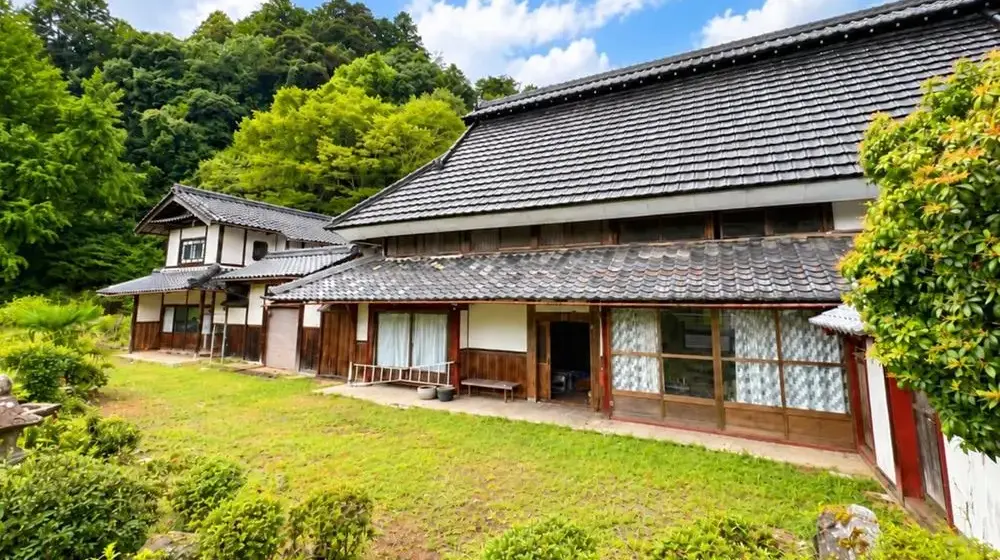
Videos about "free houses in Japan" usually show a pretty farmhouse and a price tag of zero. Both can be true. What they leave out is the paperwork, the taxes and the state of the building, which is why the house was free in the first place.
This guide uses a real ¥0 house from our own listings to show what "free" means in practice, explains why Japanese owners give houses away, and lists every cost you still pay. All prices come from the 5,700+ houses for sale on Japan Houses, and the rules from official Japanese sources.
Short answers about free houses in Japan
- They exist. A few owners list a house at ¥0 or close to it. On our site, 11 houses cost ¥100,000 ($636) or less.
- Why: the owner pays property tax and upkeep on a house nobody wants, and cannot simply hand it back to the state.
- What you still pay: the agent, the judicial scrivener, registration tax and, often, acquisition tax and gift tax.
- What you get: usually an old house sold as it is, with no guarantee against defects and often with the previous owner's belongings inside.
- Foreigners: can take a free house exactly like a Japanese buyer.
- The real cost is the repairs, or the demolition if the house cannot be saved.
Are there really free houses in Japan?
Yes, but far fewer than social media suggests. Japan counted 9.0 million vacant homes in its last national housing survey, 13.8% of all homes, the highest share ever recorded. About 3.86 million of them are not for rent, not for sale and not used as second homes. They just sit empty.
By definition, none of those 3.86 million houses are on the market. Free listings come from the few owners who decide to act. Here is how the cheapest end of our listings looks:
Number of houses for sale on Japan Houses in each price range, out of 5,713 (updated with every new listing). In orange: ¥1 million or less.
So a free house is an exception, but a very cheap house is not. 185 of our houses cost ¥1 million or less, and 739 cost ¥3 million ($19,078) or less. Those cheap houses are usually a better deal than a free one, for reasons you will see below.
What a real ¥0 house looks like: our free house in Hamada
When we wrote this guide, one house on our site was listed at ¥0: a 1934 wooden house in Hamada, Shimane, on the Sea of Japan coast. The Japanese listing says the house is transferred free of charge, and shows ¥0.1 only because the portal cannot display a price of zero.
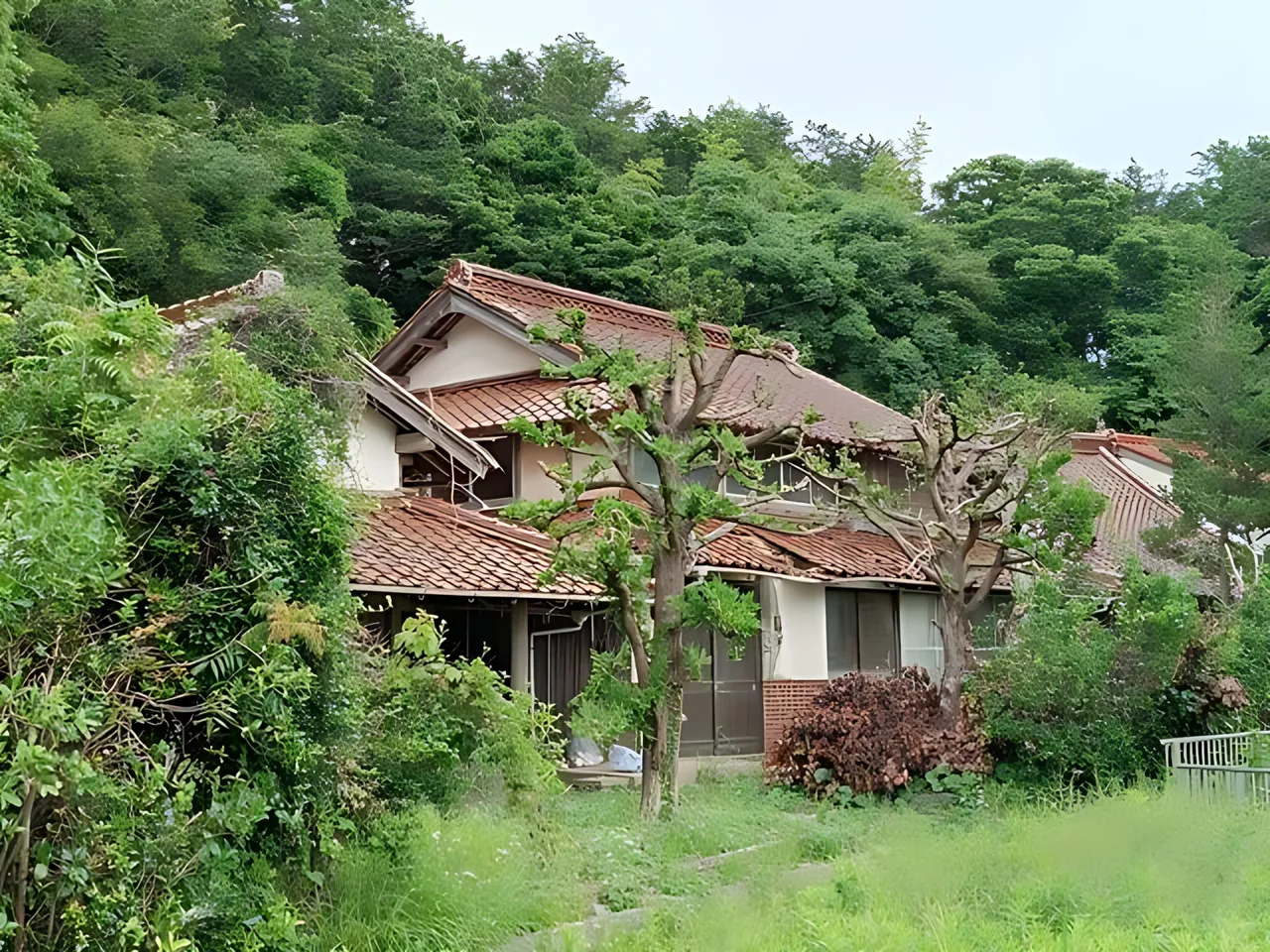
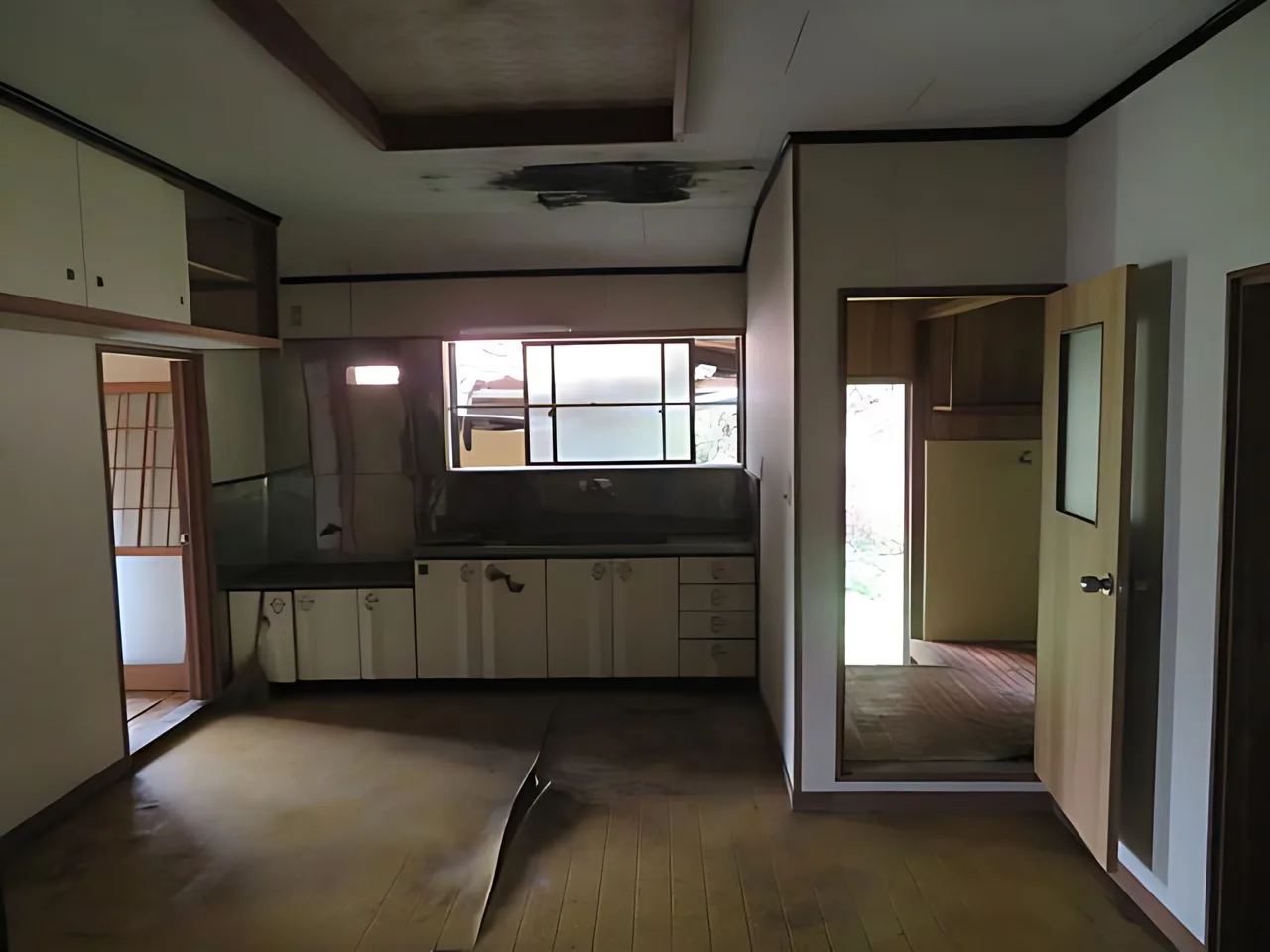
On paper, it is a lot of house for nothing: a two-storey house of about 162 m² with nine rooms, a well and 688 m² of land. Read the conditions in the Japanese listing, though, and you see what the seller is really handing over:
| What the listing says | What it means for you |
|---|---|
| Sold as is, no liability for defects | If the roof leaks or the floor rots, it is your problem from day one |
| No confirmation of boundaries | The seller will not mark the property lines with the neighbours; a survey is at your expense |
| The owner's belongings are left inside | Clearing the house is your job and your bill |
| Pit toilet (no flush, no sewer) | Budget for a septic tank or connection before living there |
| A well on site, working condition unknown | You may need to bring in mains water |
| Water pipe in the road shared by 3 owners | Changing it needs the agreement of all of them |
| Total of 4 plots, one of them "miscellaneous land" | Four plots to register, and four tax assessments |
| Property tax: ¥27,187 a year | Paid every year by whoever owns it on January 1 |
None of this makes it a bad house. It makes it a project. The listing also mentions a pit about 1 m deep between the plot and the woods, and an empty temple next door, so a visit, or a local agent's visit, comes before any decision. The nearest station, Sufu, is a 30-minute walk away.
Why would anyone give a house away?
Because an empty house costs its owner money every year, and Japan offers no easy way to get rid of one.
- Property tax never stops. The owner on January 1 receives the fixed asset tax bill: 1.4% of the town's assessed value, plus up to 0.3% city planning tax in some areas. For the Hamada house, that is ¥27,187 ($173) a year, for a house nobody lives in.
- A neglected house can cost more tax. Under the amended Vacant Houses Act, in force since December 13, 2023, a town can warn the owner of a poorly kept empty house and then issue a formal recommendation. After that, the land loses its residential tax reduction, which normally cuts the land's taxable value to as little as one sixth.
- The state will not take a house. Since April 27, 2023, heirs can hand inherited land over to the state, but any land with a building on it is refused outright. The owner must demolish first, pay a ¥14,000 review fee per plot and a charge for ten years of upkeep.
- Inheritances can no longer be ignored. Since April 1, 2024, heirs must register an inherited property within 3 years, or face a fine of up to ¥100,000.
Put together, giving the house to someone who will use it is often the cheapest option the owner has. The company handling the Hamada transfer even calls itself, in Japanese, a "negative real estate" office: a pun on fudōsan, the word for property.
What you still pay for a free house
A ¥0 price removes the purchase price, not the costs around it. Most taxes are calculated on the assessed value set by the town, which you will find on the property's tax certificate, not on the price you pay.
| Cost | How much | Notes |
|---|---|---|
| Agent's fee | Up to ¥330,000 including tax on houses at ¥8 million or less, if agreed in advance | Ask for the fee in writing before you commit |
| Judicial scrivener (shihō shoshi) | Set by each office | Ask for a written quote for the transfer of every plot |
| Registration tax | 2% of the assessed value for a gift (land and building) | A sale gets 1.5% on the land until March 2029 |
| Real estate acquisition tax | 3% of the assessed value, land value halved (until March 2027) | Not due if the assessed value is under ¥160,000 for land or ¥340,000 for the building (since April 2026) |
| Gift tax, if the giver is a person | 10% on the first ¥2 million above the ¥1.1 million yearly allowance, rising to 55% | Based on the value the tax office gives the property |
| Income tax, if the giver is a company | Added to your taxable income in Japan | Applies instead of gift tax |
| Fixed asset tax, every year | 1.4% of the assessed value, plus up to 0.3% city planning tax | Paid to the town where the house is |
An example. Say a free house and its land are valued at ¥2 million in total for gift tax. The gift tax would be (¥2,000,000 − ¥1,100,000) × 10% = ¥90,000. If the assessed value on the tax certificate were ¥1 million, the registration tax would add 2% of it, ¥20,000. Add the agent's fee and the scrivener and the "free" house costs several hundred thousand yen before you open the door. These are rules of thumb: the values the tax office and the town use can differ, so ask a Japanese tax accountant to run the numbers for your case.
If you live abroad, you also need a tax representative in Japan to receive and pay the yearly tax bill, and since April 2026 non-residents must report any acquisition of Japanese property, even a free one, to the Ministry of Finance within 20 days. Our guide on buying property in Japan as a foreigner explains both.
Is a $1 house any different from a free one?
Not much. A ¥1 or $1 price turns the deal into a sale rather than a gift, which changes some details: the land registration tax drops from 2% to 1.5% (until March 2029).
It does not make gift tax disappear. Japan's National Tax Agency says that when you buy something from a person for a remarkably low price, the gap between its market value and what you paid counts as a gift from the seller. A token price on a house with real value does not change that. On a house whose market value is close to zero, the question rarely arises, which is why a tax accountant should look at the case, not a rule found online.
Do towns give houses away for free?
Towns in Japan run vacant-house programmes that list empty homes for sale or rent, usually at low prices. They do not own the houses and rarely give them away. What they often add is money for the new owner, with conditions.
Hamada, the city of our free house, is one example. If you buy or rent a house through the city's own programme, it pays two thirds of the renovation costs up to ¥300,000 ($1,908). The ceiling rises to ¥500,000 if you move in from outside the city or are under 40, and to ¥1 million ($6,359) if both are true. You must apply within 6 months of the contract, use a registered builder and finish the work by the end of the fiscal year (March 31). The city also pays 40% of the cost, up to ¥500,000, to demolish a vacant house it has judged dangerous.
Every town sets its own rules, and the subsidies usually go to people who will actually live there. A house bought through a private agent, like the Hamada ¥0 house, does not automatically qualify. Ask the town hall before you sign, not after.
Houses in Japan under $5,000, for sale now

Compact 2K single-storey house with sea views in Doikubi, Nagasaki
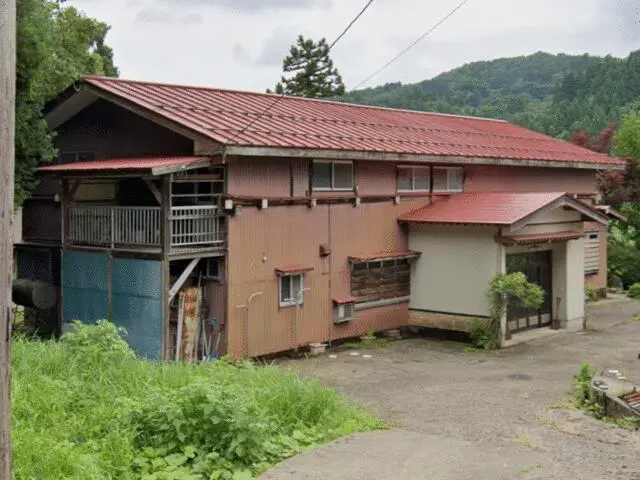
Single-storey 4DK house with a red roof near the Nadachi River, Joetsu

Steep-roofed old farmhouse in the Suzuka foothills, Higashiomi, Shiga

1952 farmhouse with tatami rooms on 834 m² of land in Shirakawa, Fukushima

Large 1922 wooden house with earthen-floor entry hall in Yabu, Hyogo

1906 two-storey wooden house near the beach in Innoshima Mitsunosho, Onomichi
How much does it cost to make a free house livable?
This is where a free house can become the most expensive option. Most ¥0 and near-¥0 houses are old wooden houses that have been empty for years, and the work usually starts with the roof, the floors, the plumbing and the toilet.
There is no official price list for renovation, so ask for at least two quotes from local builders after a proper inspection. For demolition, there is a public reference: the national standard cost that towns use for their subsidies is ¥36,000 per m² of floor area for a wooden building this fiscal year. For the 162 m² Hamada house, that comes to about ¥5.8 million ($36,884). Real quotes are often lower, but they rise quickly if a truck cannot reach the house.
That is why a house at ¥2 or ¥3 million in good condition often costs less, in the end, than a free one that needs everything. Compare the total: price, transfer costs, the work to make it livable, and the yearly tax.
 Tailor-made house search · freeLooking for a house in Japan? We find it for you.Answer 7 quick questions. We search 300,000+ houses for sale in Japan and keep only the ones that fit you.Start my free search →
Before you say yes to a free house
Seven questions to ask the agent
- Can the house be rebuilt? Some plots have no proper road access. If the house burns or falls down, you may never be allowed to build again.
- What is the assessed value? Ask for the tax certificate (kotei shisan hyōka shōmeisho). It drives the registration tax, the acquisition tax and the yearly bill.
- Who is giving it, a person or a company? It decides whether you face gift tax or income tax.
- What is left inside? Belongings, furniture and rubbish are often left behind, and clearing them is your cost.
- How do water, sewage and heating work? Pit toilets, wells and old gas tanks are common in free houses.
- Is any of the land farmland? Fields need permission from the local agricultural committee to change owner, for Japanese and foreign buyers alike.
- How would you sell it later? If nobody wanted it at ¥0, you may not find a buyer either. Plan to keep it, or budget for demolition.
If the answers work for you, a free house can be a good project: a lot of space and land for the price of the paperwork. If they do not, the 739 houses we list at ¥3 million or less give you more choice, often in better condition. If you want an empty house to restore, start with our akiya (vacant houses) for sale.
Frequently asked questions
Is it true you can buy a house in Japan for $500?
Sometimes, yes. A small number of old rural houses are listed at ¥100,000 or less, and a few are given away for ¥0. The price is only the start: you also pay the agent, the judicial scrivener and the transfer taxes, which are based on the town's assessed value and not on the price, and most of these houses need serious repairs.
Is Japan giving away houses for free?
Not the government. Free houses are given away by their owners, usually heirs who do not want to keep paying property tax on an empty house. Towns run vacant-house programmes and some pay renovation subsidies to new owners, but they do not hand out houses for nothing.
Can foreigners get a free house in Japan?
Yes. A free house is transferred like any other property, and Japan has no nationality or visa condition for owning one. Read the town's own rules if you use its vacant-house programme: some subsidies are reserved for people who move there. Our guide Can foreigners buy property in Japan? covers the legal side.
Do you pay tax when you get a house for free in Japan?
Usually, yes. You pay registration tax (2% of the assessed value for a gift), real estate acquisition tax unless the assessed value is below the tax-free threshold, and the yearly property tax. If the giver is a person, the value received above ¥1.1 million a year is subject to gift tax; if it is a company, you pay income tax instead. Ask a Japanese tax accountant before you sign.
How much does it cost to demolish a house in Japan?
It depends on the size, the structure and the road access. As a guide, the national standard cost that towns use to calculate demolition subsidies is ¥36,000 per m² of floor area for a wooden building this fiscal year, so about ¥5.8 million for a house of 160 m². Real quotes can be lower, and some towns pay part of the bill.
Why are there so many empty houses in Japan?
Japan had 9.0 million vacant homes in the last national housing survey, 13.8% of all homes, a record. About 3.86 million of them are not for rent, not for sale and not second homes: they are simply empty.
Sources (13)Official Japanese sources and our own listing data. Show the list
- Statistics Bureau of Japan: 2023 Housing and Land Survey, basic results (PDF)
- National Tax Agency: gift tax rates and basic exemption (Tax Answer 4408)
- National Tax Agency: property received for a remarkably low price (Tax Answer 4423)
- National Tax Agency: gifts from a corporation are taxed as income (Tax Answer 4405)
- National Tax Agency: registration and license tax rates (Tax Answer 7191)
- Aichi Prefecture: real estate acquisition tax, rates and tax-free thresholds
- Ministry of Internal Affairs and Communications: fixed asset tax
- MLIT: legal cap on agent fees, including the ¥8 million rule
- MLIT: amended Vacant Houses Act, summary (PDF)
- Ministry of Justice: handing inherited land to the state
- Ministry of Justice: mandatory inheritance registration
- Hamada City: subsidy for demolishing dangerous vacant houses
- Hamada City: renovation subsidy for houses from the city's vacant-house programme
 Written by the Japan Houses team from official Japanese sources (listed above) and our own data on the houses we list. We are not lawyers or tax advisers: for your own purchase, check with a licensed agent, a judicial scrivener (shihō shoshi) and, for taxes, a tax accountant. Published 18 October 2026, updated 18 October 2026.